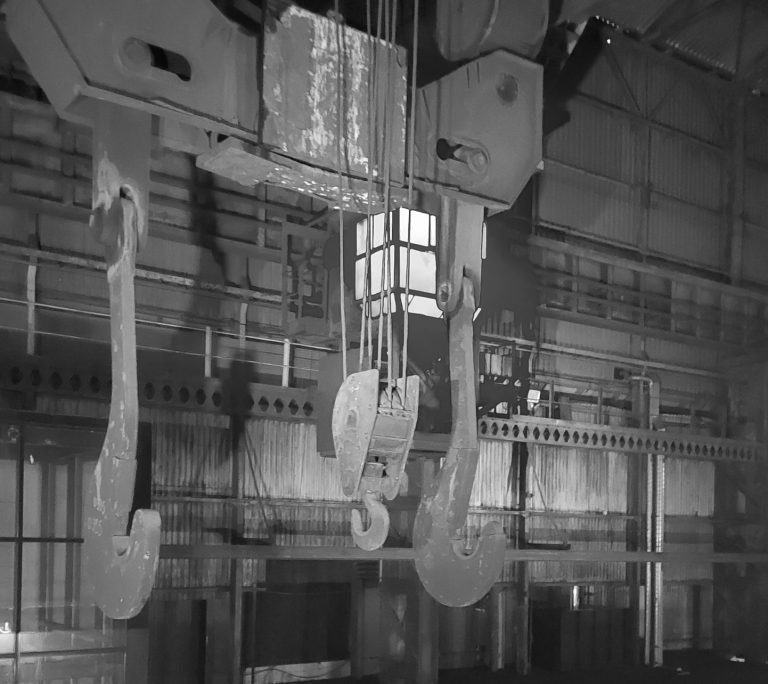
“I was born here, lived here most of my life. Went away for college, university. And then back here. When you were 18, they gave you a choice: you can have an apprenticeship at the steelworks. You can have an apprenticeship at the Coal Board. Or you can go to University. Oh, University, please! But a lot of friends from school went there and did apprentices there. So that all went. So, you sort of lost a lot of training as well as jobs. All my family: steelworks. Great grandfather was melting shop manager of Steel, Peech and Tozer. Grandad worked in the steelworks. Both of them. My father started off as a sawman on the finishing banks till he had an injury caused at work, where he slipped all his discs. Two years sort of off work in traction and then retrained as a crane driver. Again, at the same place, the finishing banks at Steel, Peech and Tozer. British Steel etc. until redundancy. I was lucky enough to get invited to the last day at British Steel when he took me in his crane and we trundled along and he says: James, press that button and I dropped the last load of scrap into the furnace before they shut British Steel and we watched guys welding the doors shut as the steelworks closed. Dropped the last of steel in and went to the Temple pub and ended up absolutely hammered with my father for the rest of the night.
It was a very productive area with the steelworks and the mines. You can say that wherever there was a big steelworks, you used to see it on the news. There was something big or something happening at wherever. And, you knew the name of a steelworks town: Stocksbridge or something. And you knew where it was because it was a big steel or coal producing area. I do think that it sort of gets forgotten a bit because it’s not producing anything anymore. Why? Why would you need to know where it is? Why would you need to know anything about it? But I’m really proud to be from Rotherham.
We had this strong community, more so in the pits, I think than the steelworks. My sort of knowledge is through the steelworks, through my father and my grandfather, my great grandfather. The pit knowledge is mainly through friends who were there. I think the pits were very much communities. Because they were outside of the town centre in very small villages that were pit villages. You know, they came about for a reason. The reason was the mine. They might have been a farming hamlet. Then coal was discovered. The village was built, but it was built for the purpose of the pit. So, you can imagine that once the pit goes then the village does lose all its reason to be there. And they do, you know, they have just sort of fallen apart in a lot of places. The community feel has gone.
The whole scene of in the evenings has disappeared: people would finish work and the town were full. I mean, I used to come down Templeborough and you know, the road was just packed. People, the blokes coming down the slipway from what is now Magna, coming down into Templeborough. And it was just rammed with people, they were getting buses that were packed full, going into town, getting a beer maybe before you went home, or whatever, you know. It was just a busy, busy place which it certainly isn’t now. Everything happened about the same time. Out-of town shopping centres, people driving to takeaway pizzerias and Good Fellas on a Friday. And it just seemed to take everything out of the town. They lost the industry, they lost the retail, and they lost the entertainment.
It’s just the disappearance of the social scene, you know. So, you went from having a very vibrant town where people earned good money. You know, if you’re working in the steelworks or you’re working down the pit you were on a fairly decent wage, and the shops were supported and all that. And, you know, they were nice shops. And then you’d also got all the pubs and everything. On every corner, there was a pub. We used to do a great pub crawl where now it’s just one. The centre, the town centre, you drive through in the evening or walk through in the evening and there’s just nothing. There’s no reason to really go into town anymore. The loss of the big chain stores was the real, sort of, death knell for it.
The investment and the way that regeneration’s gone, it seems to have been targeted on an area for a short period of time. And then moved on. You got free rent, great rebates. Go wherever you want. For an 18-month period. And then it’s moved on to somewhere else. And all those nice shops that did open have then gone. So, the area just regenerated and then just becomes sort of shit again.
Politics has shifted too. In the pits, and during the miners’ strike and in the steelworks, everybody was very left wing. Fairly, you know, very union focussed and very supportive of a socialist sort of thing. Now you talk to people, and they’ve all moved more or less far right. So, they are all like, you know, what a mess the Labour government is making and we’ve got a useless Labour Council. And they’ve gone really sort of quite the polar opposite in their political views from what I remember when they were 18 or 19.”