Katrina (56) talks about the community spirit in former pit villages, how it continues to bring together and separate groups of people, and highlights the pride that came from powering and protecting the nation.
“I’m Katrina. I’m born in 68. I think my memories of growing up in this area are, well, obviously pits everywhere. Nearly every sort of turn there was a pit. The other quite overriding thing around this area because of the pits was the smell. That actually is something that’s quite strong for me, that real coal tar smell that sort of got in the back of your throat, which obviously always got stronger as you went past the pit. I think I was 15 when the miners’ strike started. That was a little bit of a political awakening of like, oh actually things that have been talked about on the telly are happening here where I live, not just somewhere down in London or somewhere else. And that there was a real connection between what happened in government and what’s affecting people here.
My dad wasn’t a miner, so we weren’t directly involved in that respect. But it had this knock-on effect of impacting every other industry that was around. So, shops closing like every other week because after the pits had closed, nobody got any money, or they were moving away for work or going to work somewhere else. So, lots of local shops closing down. That’s a big thing that I remember. And there’d just been sort of a bit of a psychological shift, I think, more than anything. People would sort of identify themselves as pitmen, and they were colliery men and equally the women were colliery wives. And then that sort of really strips everybody’s identity away. Because actually who are they then? It’s a bit of an identity crisis. They either sort of reinvented themselves as steelworker or they went and did something completely different. Or they were a little bit lost, I think. And then it becomes quite nostalgic for what was the pit.
There is a lot of nostalgia as people get older and we move further away from when the pit closed. It’s about making sure that things aren’t forgotten. So, then it becomes more about a sort of historical tourism, you might call it, where people are wanting to find out about what was here before. There’s a quite a strong will and drive to hold on to some of that identity and maintain it through things like the history society that we’ve got, so it’s about pride in your community. You were powering the nation. I think that’s how people sort of saw it because obviously the coal was going to power stations, giving electricity. So, you were the lifeblood of the nation in a lot of ways. And I also get that with the steelworks. My first husband worked in the steelworks. They made the armour plating for challenger tanks and there was a real pride in that and they’d do ballistic testing on bits of it to make sure that it was up to standard. And, it was like, oh, we’ve had a really good day today. We hit hundred percent of quality control in the steel that we’ve produced this week. So, there was a definite pride of like, yeah, we’re defending our boys when they’re going out there with their tanks. The big armour plating type, that’s the sort of stuff that they were doing down at Attercliffe going into Rotherham, Templeborough. And obviously that’s the stuff that’s gone and we’re left with the precise precision stuff like making scalpels and surgical instruments and that type of a thing, which is a lot more specialist and tiny stuff. Not the big rolling mill type of thing.
I’ve moved to Kiveton just before I met my second husband. And when he came down, he was living in Leeds before, he couldn’t believe how friendly it was and how much community spirit there was compared to where we lived previously. So, I don’t know if there is something that’s a bit special about Kiveton that maybe other places perhaps have lost. That’s my sense. I just think we still have those community links. It might be a little bit of a section of road or a little bit of an estate where people are sort of really quite bonded together. Or it might be through different interest groups. They just, we’ve perhaps got lots of little communities within a big community now. Instead of it all being focussed around one employer, which was the pit. I still think it’s there. I think that that friendship, that community spirit, that support for everybody else, the kindness, the humanness is still there and is really quite strong.
We had lots of community spirit when the town got snowed in for 6-7 day a few years ago. So, people who did have four by fours were going and fetching milk and things like that for neighbours and whatever. Doing things as a community to get people to come and support things, I think, does make a massive difference to that sense of community, that cohesion that you’ve got as a group of like, actually, this is where we all live, and it’s a nice place to live and we all want to look after it and for it be a nice place to live. For me, anyway, I think it’s about community, it’s about the people that’s here and how you actually help each other, which I think was why it was so good during Covid that people wanted to help their neighbours and other friends, you know. I think it’s when you have a sort of a bit of a disaster type thing like Covid happening that really pulls people together. I know it’s no different to lots of other places, but I think doing sort of events as a community makes such a big difference to how you feel about where you live and the area that you are living in, and what you feel about community.
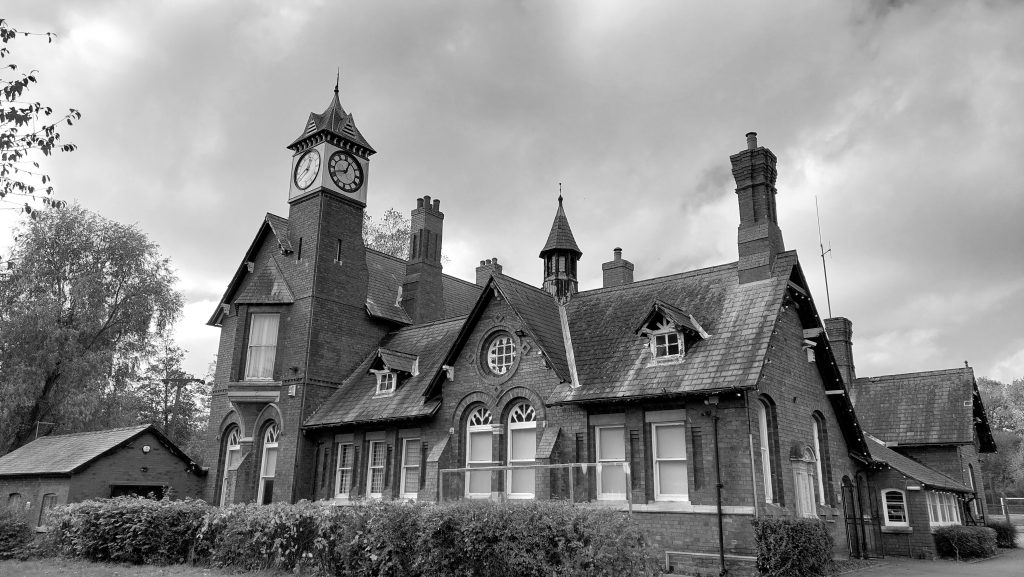
We’re quite unique as a village in that the pit offices are still there and it’s a community building. People in the community helped to actually save the Colliery Offices. They set up the Community Development Trust there and they got Heritage Lottery funding, which helped set up the History Group and the website and various things like that. What the Colliery Offices initially were set up to do was about education or re-education. So, they were doing lots of different classes. One of the things was like computer classes in the mid-90s where people were just starting to get PCs at home. And quite a few other little bits of stuff that was going on. But I think it’s down to a few key people at the time that actually got that going. I worked down there from 2016 to 2018 as a community development officer. So, doing things like setting up the lunch group, even though we didn’t have a kitchen to start with and I cooked the meals at home and brought them in.
I think there’s a common misconception about a lot of people in not just this community, but lots of other communities where they think that things sort of happened on their own and they don’t. And you actually need people who have got a little bit of drive and a bit of passion to actually make things happen. When I was working as a community development officer down in the Colliery Offices, I organised this picnic on the old pit top area to celebrate 150 years of sinking the pit [in 2017]. It was a community event, and we put on loads of bands and various little activities. And I thought it’d be really nice to have something for the kids, and I got in touch with an ex-miner who did storytelling, funny stories for kids. As soon as I told him where we were, he says, oh, that’s Rotherham, isn’t it? I says: yeah. South Yorkshire? Yeah. Sorry, love, I can’t come. Because he was from Mansfield, and they were Nottinghamshire. He says if I come and someone finds out that I’ve been and talked to people that were South Yorkshire miners. He says I’ll have a brick through my window. The animosity between Nottinghamshire and South Yorkshire is still strong 30 years after the pits have closed.”